
Sign In My Account
About
Vision
Contact
Leadership
Programs
Nautilus
Missional Disciple
The Gotham Fellowship
Entrepreneur Support Group
Career Mentoring
Events
Calendar
Event Content Library
Resources
Foundations of Faith and Work Course
Ministry Partner | The Table
Ministry Partner | VOCA Center
Blog
Videos
Content Recommendations
Support
SUBSCRIBE

Nashville Institute for Faith and Work

Sign In My Account
About
Vision
Contact
Leadership
Programs
Nautilus
Missional Disciple
The Gotham Fellowship
Entrepreneur Support Group
Career Mentoring
Events
Calendar
Event Content Library
Resources
Foundations of Faith and Work Course
Ministry Partner | The Table
Ministry Partner | VOCA Center
Blog
Videos
Content Recommendations
Support
SUBSCRIBE
Nashville Institute for Faith + Work
November 2, 2020
Faith and Work in Action, Cultural Engagement

Working Faithfully Beyond Election Day

Nashville Institute for Faith + Work
November 2, 2020
Faith and Work in Action, Cultural Engagement
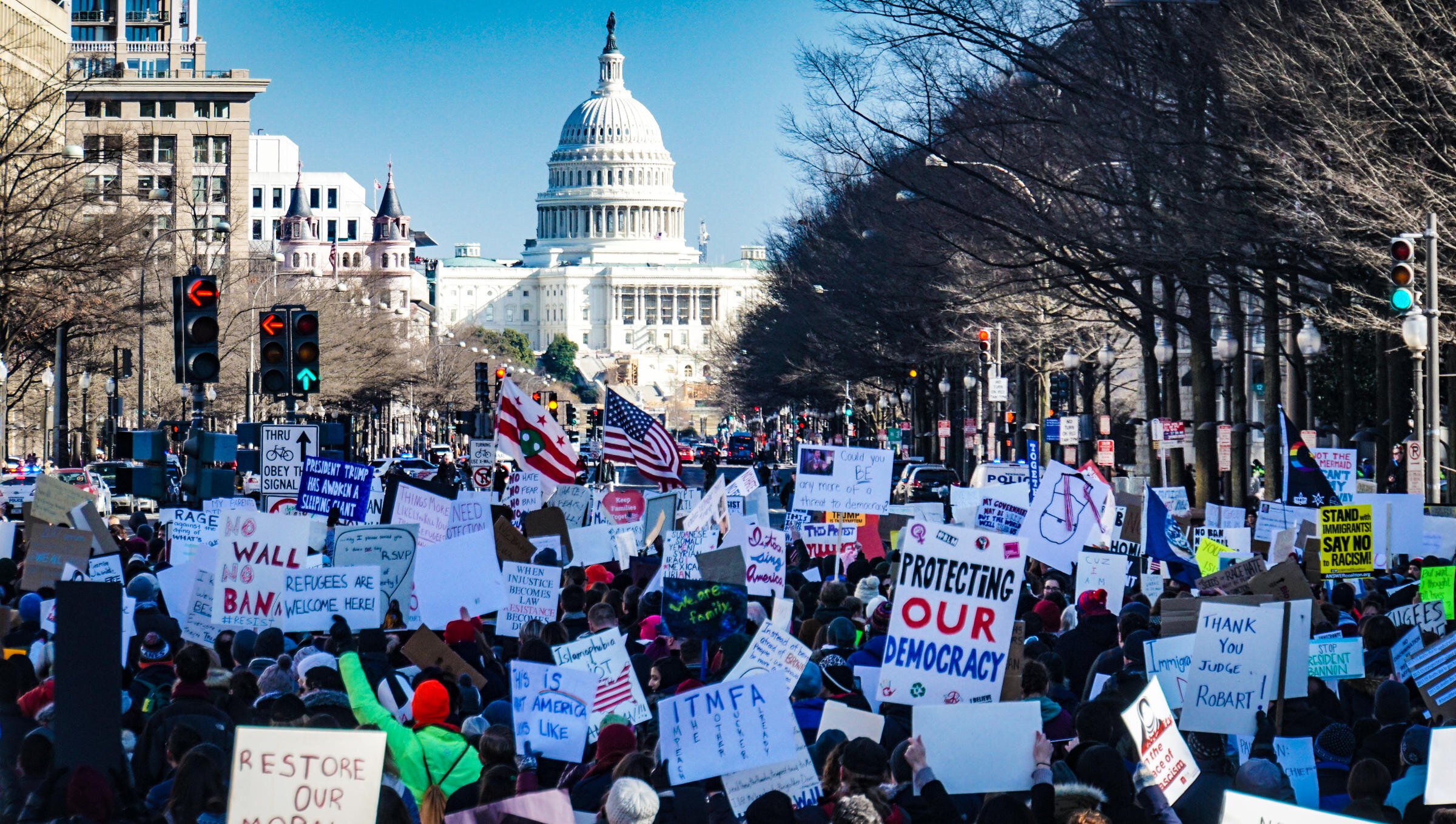
32559700202_bab8814c4b_o.jpg

No matter your political affiliation, you have probably highly anticipated the results of this Election Day. As Christians we acknowledge that our allegiance is to God’s kingdom, not a candidate or political party. However, one way that we participate in God’s work here on earth is through our political engagement. As Election Day comes and goes, how do we continue to work towards God’s greater kingdom, regardless of political outcomes? 

On September 17th, 2020, The Nashville Institute for Faith and Work and the Denver Institute for Faith and Work partnered with other faith and work organizations across the country to present The Politics of Neighborly Love: Christian Citizenship in a Divided Age, a national forum on how Christians can engage faithfully with politics. Below is a clip from the event featuring one of the panelists, Stephanie Summers, CEO of the Center for Public Justice.

In the following clip, Stephanie answers the question “How does your faith influence your work at the Center for Public Justice?” Her answers provide a practical framework for living out your faith in the days and weeks following the election. Additionally, they encourage all of us to remember that alongside faithful and thoughtful political engagement, our day-to-day work is a powerful avenue for participation in God’s kingdom. Included below is the video clip as well as a guided reflection to assist you in considering: How does integrating your faith and work allow you to serve your vocation, neighbors, and city beyond Election Day?

In this excerpt, Stephanie shares three ways that her faith informs her work: confidence, perseverance, and seeing all people as image-bearers of God. Regardless of the job, we can apply these principles to better love God and our neighbors through our work.

1)Confidence: “Knowing what God intends as the end of the story means that every day we can trust God for the results of our work in a world that is still marred by sin.” 

As Stephanie explains, “God is not hampered in accomplishing what God intends,” which frees us to work without the pressure of believing success is entirely up to our performance at work. Instead, our ultimate hope is in the perfect plan of redemption that God is authoring. 

Q: How does knowing that God’s plans cannot be “hampered” encourage you in your work and in your political participation? How does knowing the end of the story offer you confidence grounded in something other than your own performance?


2)Perseverance: “Perseverance is the persistence in doing something despite difficulty or delay in achieving success.”

Stephanie says that because the Christian faith provides a robust explanation of sin, we should not be surprised when we encounter brokenness and systemic injustices in our industries. We are called to participate in the slow, costly work of addressing brokenness in our work, and our perseverance in this area is one way that we bring about God’s kingdom here on earth.

Q: How could perseverance transform both your work and engagement with politics? In what areas of your industry or community do you notice brokenness the most, and where could you begin to partner with God in redeeming these areas? 

3) Image-Bearing: “Because God created every human being to bear God’s image, this means that every human possesses fundamental dignity and worth.”

Stephanie shares that a Christian approach to work is grounded in the doctrine of the image of God. The reality that all people are image-bearers means that our vocations must be aimed at  serving those around us, rather than seeing people as a means to an end or our relationships as transactional. 

Q: How might recognizing all people as image-bearers change the way you work? How does the concept of image-bearing change the way you relate to those with different perspectives than your own? 

Watch "The Politics of Neighborly Love"

Related Articles
julian-lozano-GYEBshjDAfc-unsplash.jpg
December 13, 2022
Wisdom in the Age of AI
December 13, 2022

In the last week of November 2022, an artificial intelligence research lab called OpenAI launched a program called ChatGPT. GPT stands for “generative pre-trained transformer.” What exactly does that mean? Perhaps you should ask the program itself.

In the words of OpenAI, ChatGPT is “a model which interacts in a conversational way,” gathering information to user questions online and communicating responses to users in a way that mimics human authorship with incredible effectiveness.

Designed in the form of a virtual conversation partner, ChatGPT has the capability to produce an essay on any given topic in a matter of seconds. (To High School English Teachers: All the best…)

ChatGPT surpassed 1 million users on the platform in its first 5 days open to the public. It’s a fascinating program and quite competent.

As an example, here’s the response I received when I asked ChatGPT, “Share with me the value of integrating my faith and daily work, from a Christian viewpoint:”

Integrating your faith and daily work can provide a sense of purpose and meaning in your life. It can also help you to live out the values and principles of your faith in a practical way, and to use your talents and abilities to serve others. This can bring fulfillment and joy, and can help to deepen your relationship with God. Additionally, by living out your faith at work, you can be a positive influence on those around you and can help to create a more positive and compassionate work environment.”

Pretty solid response, right?! 

Read more →
December 13, 2022
matt-hoffman-Q0AM87PsYkE-unsplash.jpg
September 2, 2022
Is Quiet Quitting for Christians?
September 2, 2022

How did we get here? The challenges of a changing economy and context for work over the past several years have created a variety of new challenges for both employees and employers. That is certainly true. As pressure is passed down the chain, many employees find themselves frustrated with their experience.

Read more →
September 2, 2022
charles-forerunner-3fPXt37X6UQ-unsplash.jpg
June 2, 2022
Business Ethics in a Pandemic
June 2, 2022

In Cormac McCarthy’s Pulitzer Prize winning novel, The Road, an unnamed father and son navigate a world that has embraced cannibalism and dark predatory violence. The novel’s post-apocalyptic environment is filled with a kind of panic that we saw pale forms of during the early days of the pandemic. Like the father at the center of the story, I immediately centered my reaction on planning for my family and making sure we were prepared for whatever would come next. As the months dragged on though, I started thinking more about what it means to truly live through difficult seasons, not merely survive. I’ve found lessons from The Road to be helpful not only in my personal life, but also in how I think about the role of business.

Read more →
June 2, 2022
Newer PostWhere is God in Your Job Search?
Older PostHow Job Search Navigation Equips People to Pursue Employment
Spacer.png
1.png
2.png
3.png
4.png
6.png
7.png
5.png
8.png
9.png
10.png
Spacer.png
SUBSCRIBE.png
Back to Top
SUBSCRIBE